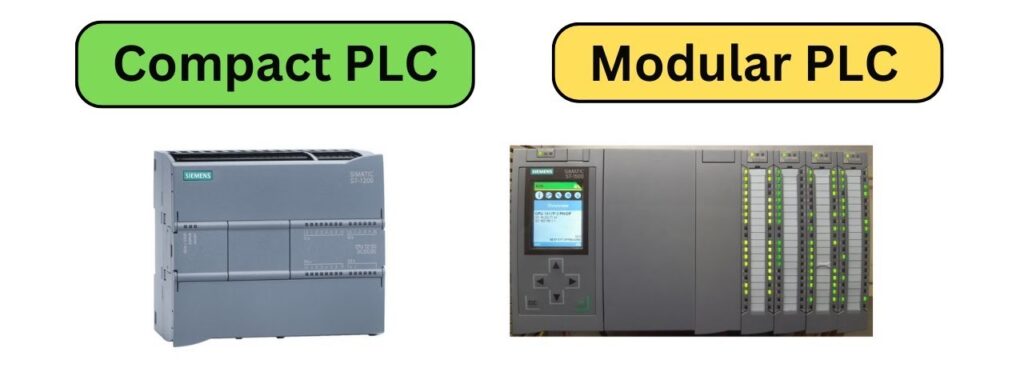
PLCs are available in different types and sizes to suit a wide range of industrial applications. Choosing the right type of PLC depends on factors such as system size, I/O requirements, scalability, and budget.
Two of the most commonly used PLC types are compact PLCs and modular PLCs. In this guide, we will explain the differences between compact and modular PLCs, how they work, and when each type is best suited for industrial automation projects.
What Is a Compact PLC?
A compact PLC is a type of programmable logic controller in which the CPU, power supply, and input/output modules are integrated into a single unit. This all-in-one design makes compact PLCs smaller, easier to install, and more cost-effective for simple automation tasks.
Compact PLCs are typically used in applications with limited I/O requirements and minimal expansion needs. They are widely used in small machines, standalone systems, and basic industrial processes.
What Is a Modular PLC?
A modular PLC is designed with separate components such as the CPU, power supply, communication modules, and I/O modules. These components are mounted individually on a rack or backplane, allowing the system to be customized and expanded as needed.
Modular PLCs are commonly used in large and complex automation systems where flexibility, scalability, and PLC programming requirements are more advanced.
Key Differences Between Compact and Modular PLCs
The primary difference between compact and modular PLCs lies in their physical structure, scalability, and how PLC inputs and outputs are handled in each system.. Compact PLCs combine all components into a single unit, while modular PLCs separate components into individual modules.
Compact PLCs are generally more economical and easier to install, whereas modular PLCs offer greater flexibility, higher I/O capacity, and easier maintenance. The choice between the two depends on system complexity, expansion requirements, and long-term project needs.
Advantages of Compact PLCs
Compact PLCs offer several advantages, especially for small-scale automation projects. Their integrated design reduces wiring complexity and installation time, making them easier to set up and maintain.
These PLCs are typically more affordable than modular systems and require less panel space. This makes compact PLCs an ideal choice for cost-sensitive applications and machines with limited space.
Advantages of Modular PLCs
Modular PLCs provide greater flexibility and scalability compared to compact PLCs. Because individual modules can be added or replaced, these systems can grow along with the application.
Modular PLCs also offer higher processing power, advanced communication options, and easier troubleshooting. This makes them well-suited for complex automation systems and large industrial plants.
When Should You Use a Compact PLC?
A compact PLC is best suited for applications with fixed requirements and limited expansion needs. These include small machines, standalone control systems, and simple industrial processes.
Compact PLCs are a good choice when budget, panel space, and ease of installation are primary considerations. They are commonly used in packaging machines, small conveyors, and basic process control applications.
When Should You Use a Modular PLC?
A modular PLC should be used when the application requires flexibility, scalability, or a large number of I/O points. These systems are ideal for complex processes that may expand or change over time.
Modular PLCs are commonly found in manufacturing lines, process plants, and large automation systems where future upgrades and system integration are expected.
Compact vs Modular PLC: Which One Should You Choose?
Choosing between a compact PLC and a modular PLC depends on the specific needs of the application. Compact PLCs are ideal for small, fixed systems where simplicity, lower cost, and limited space are important factors.
Modular PLCs are better suited for larger or evolving systems that require flexibility, higher I/O capacity, and future expansion. Understanding the project requirements, expected growth, and long-term maintenance needs will help determine the most suitable PLC type.
In many industrial environments, both compact and modular PLCs are used together, each serving different roles within the overall automation system.